
What Is a Business Sale Prospectus: A Seller's Guide
What Is a Business Sale Prospectus: A Seller’s Guide
A business sale prospectus is defined as a confidential, detailed marketing document that presents a business’s financial performance, operations, and growth potential to qualified buyers. Known formally as a Confidential Information Memorandum (CIM) or Information Memorandum, it is the primary document shared after a buyer signs a non-disclosure agreement. For small business owners preparing to sell, this document is not optional. It is the foundation that separates serious offers from casual inquiries, and it directly shapes the final sale price you achieve.
What is a business sale prospectus and what does it include?
A well-prepared prospectus typically covers six core areas: executive summary, financial performance, operational overview, market position, reason for sale, and transaction process guidance. Each section serves a specific purpose for the buyer evaluating whether to move forward. Skipping or shortchanging any section signals to buyers that you are either unprepared or hiding something.
The financial section carries the most weight. Buyers expect to see revenue history, normalized EBITDA, and cash flow statements. They also scrutinize customer analytics and growth initiatives to assess future earning potential.

The operational overview tells buyers how the business actually runs day to day. This includes your product or service offering, staffing structure, supplier relationships, and customer base concentration. A business where one customer accounts for 40% of revenue is a risk buyers will price into their offer.
The market and competitive landscape section shows buyers where your business sits relative to competitors. Growth opportunities and disclosed risks round out the picture. Balanced disclosure builds credibility. Buyers who find undisclosed problems during due diligence will reduce their offer or walk away entirely.
- Executive summary: A concise overview of the business, its value proposition, and the opportunity for the buyer.
- Financial performance: Three to five years of revenue, EBITDA, cash flow, and normalized earnings.
- Operations: Products or services, staffing, systems, and key supplier or customer relationships.
- Market position: Industry overview, competitive advantages, and market share context.
- Growth opportunities: Specific, evidence-backed paths the buyer can pursue post-acquisition.
- Reason for sale and transaction overview: Honest explanation of why you are selling and how the process will work.
Pro Tip: Keep all financial figures in the prospectus consistent with your tax returns and accounting records. Buyers will cross-reference these during due diligence, and any discrepancy will damage trust immediately.
How does a prospectus differ from a public listing or sales brochure?
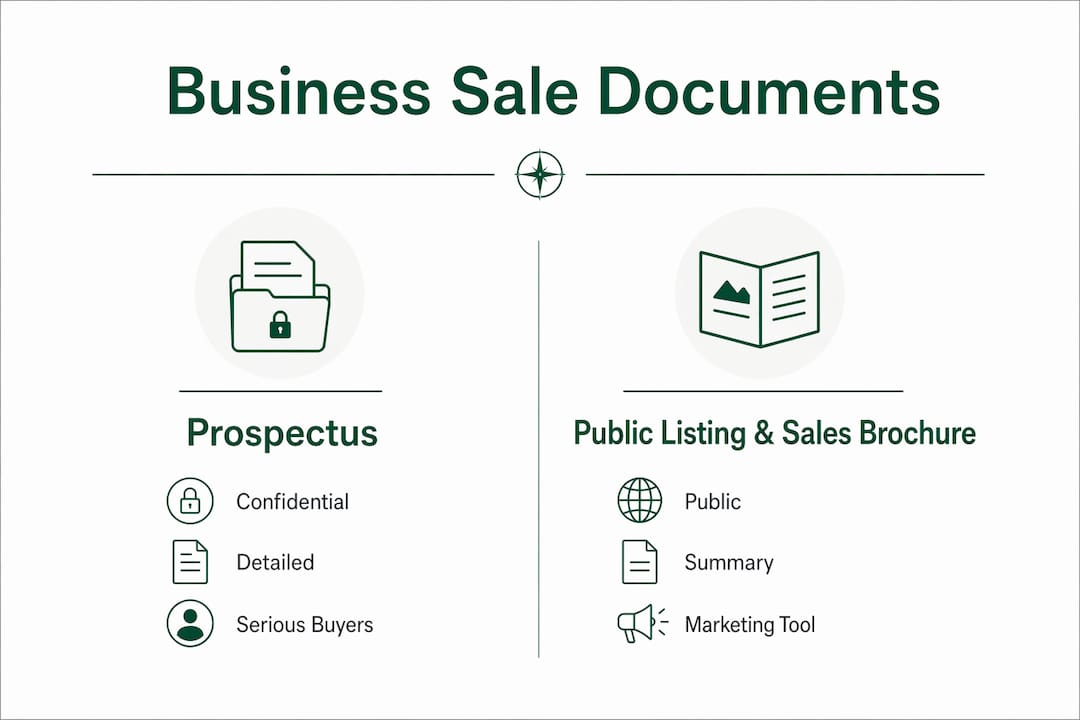
A business sale listing and a prospectus serve entirely different purposes in the sales process. A listing attracts general inquiries from a broad audience. A prospectus supports serious, qualified buyers after NDA signing. Confusing the two leads sellers to either overshare sensitive information publicly or undershare with buyers who need detail to make an offer.
The table below shows the key differences between the three main business sale documents.
| Document | Audience | Confidentiality | Depth of information | Purpose |
|---|---|---|---|---|
| Public listing | General public | None | Minimal (price, location, category) | Generate initial inquiries |
| Sales brochure | Screened prospects | Low | Moderate (highlights only) | Build interest before NDA |
| Prospectus (CIM) | NDA-signed buyers | High | Comprehensive | Support valuation and serious offers |
A sales brochure is essentially a marketing teaser. It highlights the business category, general location, and asking price range. It does not disclose financials, customer names, or operational details. The prospectus does all of that. It is the document that allows a buyer to decide whether to proceed to due diligence and make a formal offer.
The confidentiality distinction matters for competitive reasons. Your suppliers, employees, and customers should not know the business is for sale until the deal is near closing. Sharing prospectus-level detail without an NDA in place puts that confidentiality at risk.
How to create a business sale prospectus: practical steps
Creating a prospectus for selling a business requires backward planning. Assembling financials and operations documentation is time-consuming, and most owners underestimate how long it takes. Starting the process at least six to twelve months before your target sale date gives you time to clean up the financials and present the business at its best.
-
Organize your financial records. Pull three to five years of profit and loss statements, balance sheets, and tax returns. Normalize earnings by removing one-time expenses or owner-specific costs that a new owner would not incur.
-
Complete a professional valuation. A professional valuation gives you a defensible asking price and helps you identify financial weaknesses to address before going to market. Buyers will conduct their own valuation. Yours should be ready first.
-
Document your operations. Write clear descriptions of your products or services, your team structure, your key systems, and your supplier and customer relationships. Buyers need to understand how the business runs without you.
-
Draft each section of the prospectus. Start with the executive summary last, after all other sections are complete. The executive summary should distill the entire opportunity into two to three pages that make a buyer want to read further.
-
Disclose risks honestly. Every business has risks. Listing them in the prospectus demonstrates credibility and reduces the chance of a buyer renegotiating after due diligence uncovers the same issues.
-
Engage professional support. Work with a business broker, accountant, and legal advisor. Brokers understand what buyers in your industry expect to see. Accountants verify the numbers. Legal advisors protect you from disclosure liability.
-
Coordinate with your NDA and buyer screening process. The prospectus should only be released after a buyer has been screened for financial capacity and has signed a confidentiality agreement. Understanding the buyer screening process helps you set the right release criteria.
Pro Tip: Prospectuses for mid-market businesses often run 30–70 pages. For a small business, a focused 15–25 page document with clean financials and clear operational detail is more effective than a padded document that buries the key facts.
How does a prospectus fit into the overall business sale process?
The prospectus sits between two distinct phases of a business sale. The U.S. Small Business Administration distinguishes preparing to sell from transferring ownership. The prospectus belongs firmly in the preparation and buyer engagement phase. It is not a legal contract. It does not transfer ownership. It is a marketing and information document that moves a qualified buyer toward making a formal offer.
The typical sequence looks like this:
- Decision to sell: Owner decides to sell and begins financial and operational preparation.
- Valuation: Professional valuation establishes a defensible asking price range.
- Prospectus creation: The CIM is drafted, reviewed, and finalized before going to market.
- Business listing: A public or broker-managed listing generates initial buyer inquiries.
- Buyer screening: Brokers or owners qualify buyers based on financial capacity and intent.
- NDA signing: Qualified buyers sign a confidentiality agreement before receiving the prospectus.
- Prospectus distribution: The CIM supports serious evaluation and helps buyers decide whether to proceed.
- Due diligence: Buyers verify the claims in the prospectus through detailed financial and operational review.
- Offer and negotiation: Buyers submit letters of intent based on their prospectus review and due diligence findings.
- Sales agreement and closing: Separate legal agreements govern the actual transfer of ownership.
Managing buyer communications during this process requires discipline. Respond promptly to buyer questions but direct all detailed inquiries back to the prospectus. This keeps the process organized and protects you from making verbal representations that could create legal exposure later.
Key Takeaways
A business sale prospectus is the single most important document in a business sale, and its quality directly determines the caliber of buyers and offers you attract.
| Point | Details |
|---|---|
| Core definition | A prospectus is a confidential CIM shared only with NDA-signed, qualified buyers. |
| Essential contents | Include financials, operations, market position, growth opportunities, and disclosed risks. |
| Distinct from listings | Listings generate inquiries; the prospectus supports serious offers and due diligence. |
| Creation timeline | Start at least six to twelve months before your target sale date to prepare properly. |
| Process placement | The prospectus sits between valuation and due diligence, not at the legal closing stage. |
Why sellers consistently underestimate this document
Most owners I work with treat the prospectus as a formality. They assume a few pages of financials and a business description will do the job. That assumption costs them money, time, and sometimes the deal itself.
A prospectus is a key tool for business exit planning. It is not advertising. Its purpose is to give a serious buyer enough verified information to commit to the next step. When that document is thin, vague, or inconsistent with the financials, buyers either discount their offer heavily or walk away. I have seen well-run businesses sell below their actual value simply because the prospectus failed to tell the full story.
The part that surprises most owners is how long preparation takes. Normalizing three to five years of financials, documenting operations, and writing a compelling executive summary is a multi-month process. Owners who start this work only after deciding to sell are already behind. The owners who get the best outcomes start preparing twelve months out, clean up their books, and build the prospectus alongside their exit plan.
Balancing detail with confidentiality is the other challenge. You need to give buyers enough to make a decision, but not so much that a deal falling through exposes your customer list or pricing structure. A business broker with experience in your industry knows exactly where that line sits. Working with professionals is not an added cost. It is an investment that pays for itself in a higher sale price and a faster close.
— Sierra
How Compassbusinessacquisitions supports your business sale
Preparing a prospectus that attracts serious buyers and supports a strong sale price takes expertise, objectivity, and market knowledge that most owners build only once in a lifetime.
Compassbusinessacquisitions works with small business owners at every stage of the sale process, from professional valuation through prospectus preparation and targeted buyer marketing. The team connects sellers with qualified buyers who match the business profile, reducing time on market and protecting confidentiality throughout. Whether you are preparing to sell now or planning an exit twelve months out, expert broker guidance from Compassbusinessacquisitions gives you a clear process and a stronger result.
FAQ
What is a CIM in a business sale?
A CIM, or Confidential Information Memorandum, is the formal industry term for a business sale prospectus. It is a detailed, confidential document shared with qualified buyers after they sign a non-disclosure agreement.
When should I prepare a business sale prospectus?
Start preparing your prospectus at least six to twelve months before your target sale date. Early preparation gives you time to normalize financials, document operations, and address any weaknesses before buyers see them.
Is a business sale prospectus a legal contract?
No. A prospectus is a marketing and information document, not a legal contract. The actual transfer of ownership is governed by a separate sales agreement drafted and signed at closing.
Who should help me write a business sale prospectus?
Work with a business broker, a certified accountant, and a legal advisor. Brokers know what buyers in your industry expect, accountants verify the financial accuracy, and legal advisors protect you from disclosure liability.
What happens after a buyer receives the prospectus?
After reviewing the prospectus, a serious buyer proceeds to due diligence, where they verify the claims in the document. If due diligence confirms the prospectus findings, the buyer submits a formal offer or letter of intent.