
Use Brokers for Better Deal Outcomes in 2026
Use Brokers for Better Deal Outcomes in 2026
A business broker is a professional intermediary who represents buyers or sellers in business acquisitions and sales negotiations, and working with one consistently produces better pricing, faster closings, and stronger deal terms than going it alone. Small business owners and investors who use brokers for better deal outcomes gain access to off-market listings, expert negotiation tactics, and a layer of advocacy that direct buyers and sellers simply cannot replicate. This guide covers the specific broker advantages you need to know, how to prepare before your first engagement, proven negotiating strategies, and the costly mistakes that derail otherwise solid deals. Whether you are buying your first business or selling one you have built over decades, the broker relationship is the single most underused tool in most investors’ playbooks.
What tangible advantages do brokers provide in business acquisitions and sales?
Brokers deliver four measurable advantages: access, efficiency, negotiation power, and claims advocacy. Each one compounds the others, which is why broker-assisted deals consistently outperform direct transactions.
Access to exclusive listings
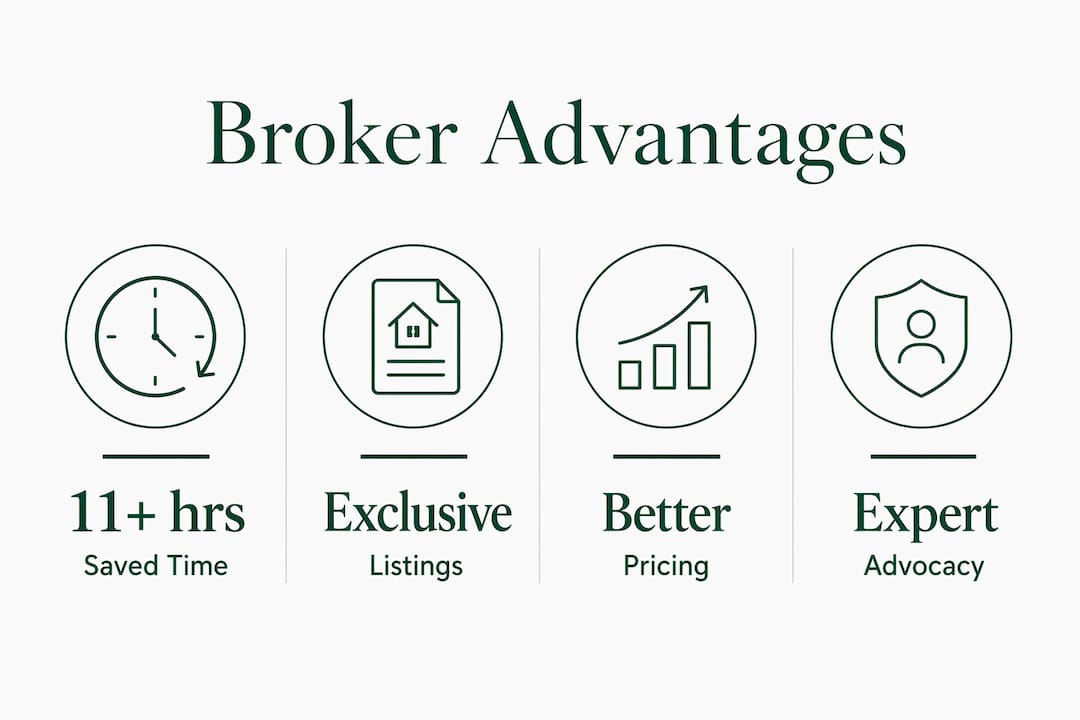
Registering with multiple brokers grants access to exclusive “pocket listings” not available on public platforms. These are deals that never hit the open market. For buyers, that means less competition and more time to evaluate. For sellers, it means qualified buyers who are already vetted and motivated.
Administrative efficiency
Professional brokers reduce administration time by over 11 hours per transaction on complex portfolios. That time savings translates directly into faster deal timelines and fewer errors in documentation. For a small business owner managing operations simultaneously, that efficiency is not a luxury. It is a necessity.
Negotiation leverage

Brokers routinely influence sellers to maintain reasonable pricing, using their intermediary position to moderate negotiations and keep deals viable. This stabilizing effect benefits both sides. Buyers get realistic pricing. Sellers avoid losing deals to overpricing.
Ongoing advocacy and financial outcomes
Broker-supported clients achieve 87% first-time acceptance on claims versus 62% direct, with payouts 35% higher and settlements 40% faster. Those numbers reflect what consistent professional representation does over the life of a deal relationship, not just at closing.
- Access to off-market and pocket listings unavailable publicly
- Reduced administrative burden and faster deal timelines
- Expert negotiation that stabilizes pricing for both parties
- Higher acceptance rates and better financial outcomes with ongoing advocacy
Pro Tip: When evaluating a broker, ask specifically how many off-market deals they closed in the past 12 months. That number reveals their actual network depth, not just their marketing pitch.
How to prepare before engaging a broker to maximize deal success
Preparation before your first broker conversation determines how much value you extract from the relationship. Brokers work harder for clients who arrive organized and clear about their goals.
Define your criteria before the first call
Write down your acquisition or sale parameters before contacting any broker. Include your target industry, deal size range, geographic preference, and timeline. Brokers who receive a clear brief can match you to relevant opportunities faster. Vague criteria produce vague results.
Research broker specialties and track records
Not all brokers operate in the same market segment. A broker who specializes in restaurant sales has a different network than one focused on manufacturing or professional services. Review their recent transaction history. Ask for references from clients in deals similar to yours. The business deal screening process you apply to acquisitions should apply equally to the brokers you hire.
Build a network of multiple brokers
Active and persistent engagement with multiple brokers creates better deal flow than sporadic contact with one. Register with at least three to five brokers in your target market. This approach gives you access to a wider range of listings and creates natural competitive pressure among brokers to bring you their best opportunities first.
Organize your financial and legal documents
Sellers should have three years of financial statements, tax returns, and a current business valuation ready before engaging a broker. Buyers should have proof of funds or financing pre-approval prepared. Brokers present organized clients to counterparties with more confidence. That confidence affects how sellers and their representatives respond to your offers.
The table below compares the key qualities to evaluate when selecting a broker type for your deal.
| Broker quality | What to look for |
|---|---|
| Market specialization | Proven track record in your target industry or deal size |
| Network depth | Documented access to off-market and pocket listings |
| Transaction volume | Recent closed deals, not just listings |
| Fee transparency | Clear commission structure with no hidden costs |
| Client references | Verifiable contacts from similar past transactions |
Pro Tip: Ask every broker candidate for their average days-on-market for recent listings. A low number signals both network quality and pricing discipline.
What proven negotiating strategies with brokers lead to better deal outcomes?
Negotiation with and through brokers follows a different logic than direct negotiation. The broker is both your ally and a filter between you and the other party. Using that dynamic deliberately produces better terms.
-
Anchor first and anchor high. Anchoring is one of the most effective negotiation strategies when working with brokers. State a figure 10–15% above your floor to force favorable counteroffers. This method can increase accepted rates by up to $0.25 per unit compared to conceding first. The same principle applies in business acquisitions: your opening offer sets the psychological reference point for every number that follows.
-
Reveal your range strategically. Never disclose your maximum budget or minimum acceptable price in the first conversation. Share your range only after the broker has provided comparable market data. That sequence keeps you informed without exposing your ceiling.
-
Ask for the broker’s best rate directly. Effective negotiation requires preparation with market data and a willingness to walk away. Ask your broker directly: “What is the best terms you have seen on a comparable deal in the past 90 days?” That question signals you are informed and sets a benchmark for what is realistic.
-
Know when to walk away. Walking away is not a failure. It is a negotiation tool. Brokers who respect your bottom line will return with fairer offers rather than lose the deal entirely. Set a clear exit threshold before negotiations begin and honor it.
-
Manage the relationship for long-term deal flow. Brokers help define negotiation strategy by balancing price, speed, and deal security using data-driven comparisons. Brokers who close one deal with you and see you treat the process professionally will prioritize you for future opportunities. That long-term relationship is worth more than squeezing an extra 2% on a single transaction.
Pro Tip: After every closed deal, send your broker a brief written summary of what worked and what you would do differently. It positions you as a serious repeat client and gives the broker context to serve you better next time.
Common mistakes when using brokers and how to avoid them
Most deal failures involving brokers trace back to a small set of predictable errors. Recognizing them in advance protects your interests and your capital.
-
Relying on a single broker. Over-reliance on one broker limits deal access and negotiation power. A vetted network provides leverage and backup options. One broker cannot cover every pocket listing or every motivated seller in your target market.
-
Failing to verify deal information independently. Brokers represent their clients, not you. Always conduct independent due diligence on financials, lease terms, and customer concentration. A broker’s enthusiasm for a deal is not a substitute for verified numbers.
-
Overlooking commission structures. Misunderstanding how a broker is compensated creates misaligned incentives. A broker paid on deal size has a natural motivation to push prices higher. Know the fee structure before you begin. Ask whether the commission is fixed, percentage-based, or tiered.
-
Treating every deal as a one-time transaction. Brokers remember clients who are difficult, slow to respond, or who back out without cause. That reputation follows you in a market where brokers talk to each other. Treat every interaction as part of a long-term professional relationship.
-
Skipping market research before broker conversations. Arriving without knowledge of current market values hands the broker too much control over your expectations. Review recent comparable transactions through resources like the off-market acquisition strategies available from Compassbusinessacquisitions before your first meeting.
The most costly mistake is also the most common: assuming the broker’s job is to protect your interests. Their job is to close the deal. Your job is to make sure the deal is the right one for you.
Key Takeaways
Brokers produce better deal outcomes when you engage them with preparation, a clear brief, and a network-first approach rather than relying on a single relationship.
| Point | Details |
|---|---|
| Build a broker network | Register with multiple brokers to access pocket listings and create competitive deal flow. |
| Prepare before engaging | Organize financials, define criteria, and research market values before the first broker call. |
| Anchor your opening position | Start 10–15% above your floor to set a favorable reference point for all counteroffers. |
| Verify independently | Always conduct your own due diligence; broker enthusiasm is not a substitute for verified data. |
| Invest in the relationship | Brokers prioritize repeat clients who are organized, responsive, and professional across every deal. |
What I have learned after watching hundreds of broker-assisted deals
The gap between a good broker and an average one is not credentials. It is consistency of engagement. The brokers who deliver the best outcomes are the ones who hear from their best clients regularly, not just when a deal is urgent. I have watched buyers miss genuinely strong acquisitions because they went quiet for three months and the broker moved the opportunity to someone else.
The other thing most guides will not tell you: brokers are not neutral. They are motivated by closing. That is not a criticism. It is a structural reality you need to account for. The best way to use that motivation in your favor is to be the client who makes closing easy. Organized documents, fast responses, and clear decision criteria make you the path of least resistance. Brokers route their best deals to clients who close.
For 2026, the most significant shift in broker relationships is the growing importance of acquisition strategy alignment before the search begins. Buyers who arrive with a defined acquisition thesis get matched to better opportunities faster. The market has tightened, and brokers have less patience for exploratory conversations with no clear direction. Come prepared, stay engaged, and treat every broker interaction as a deposit into a relationship that will pay dividends across multiple deals.
— Sierra
How Compassbusinessacquisitions helps you close better deals
Compassbusinessacquisitions works with small business owners and investors at every stage of the acquisition and sale process, from initial valuation through final closing. Their team brings verified market data, a broad buyer and seller network, and direct negotiation support to every engagement.
Whether you are looking to sell your business at maximum value or find your next acquisition opportunity, Compassbusinessacquisitions provides the professional broker services that produce results. Their track record includes transactions across multiple industries, with a consistent focus on aligning buyers and sellers around shared goals. Connect with their expert broker team to get a tailored assessment of your deal and a clear path forward.
FAQ
What does a business broker actually do in a deal?
A business broker represents buyers or sellers in business acquisitions and sales, handling deal sourcing, valuation, negotiation, and closing coordination. Their primary role is to match motivated parties and structure terms that both sides accept.
How do brokers improve negotiation outcomes for buyers?
Brokers use market data and intermediary positioning to moderate pricing and structure favorable terms. Research shows that broker expertise reduces buyer emotional bias and produces better financial outcomes than direct negotiation.
Is it worth paying broker fees when buying a small business?
Yes. The access to off-market deals, negotiation support, and administrative efficiency brokers provide typically outweigh their fees. A PEO broker or business acquisition specialist can also help structure employment and operational terms that protect your investment post-closing.
How many brokers should I work with at once?
Work with at least three to five brokers in your target market. Registering with multiple brokers expands your access to exclusive listings and creates competitive pressure that motivates each broker to bring you stronger opportunities.
What is the biggest mistake buyers make when working with brokers?
The most common mistake is relying on a single broker and treating the relationship as transactional. Over-reliance on one broker limits deal access and negotiation power. Building a vetted network and maintaining consistent engagement produces significantly better deal flow over time.