
Prepare Your Business for a Strategic Sale
Prepare Your Business for a Strategic Sale
Preparing a business for a strategic sale is the process of systematically increasing its value, reducing buyer-perceived risk, and organizing documentation before going to market. Owners who prepare early and follow a phased plan consistently receive stronger offers. Owners who start early receive 20% to 40% more at closing than those who sell without preparation. That gap is not accidental. It reflects the difference between a business that looks ready and one that actually is. Compassbusinessacquisitions works with owners at every stage of this process, from baseline valuation through deal close.
What do you need before you prepare business for strategic sale?
Business sale readiness begins with a professional baseline valuation. Without one, you cannot identify where value is being lost or what buyers will scrutinize. A CPA-led valuation under recognized standards gives you a factual starting point and a roadmap for improvement.
Clean, consistent monthly financial reporting is the second non-negotiable. Simple, reliable financial controls matter far more than complex systems. Buyers want to see three years of organized financials that tell a consistent story, not spreadsheets patched together at the last minute.
Understanding your key value drivers is equally critical before you begin. Revenue quality, customer concentration, recurring income, and gross margin all affect the multiple a buyer will pay. A business with 60% of revenue from one customer carries a different risk profile than one with 200 customers spread evenly.
Legal and compliance housekeeping before the sale avoids surprises that can derail deals or reduce the final price. Clear contracts, current licenses, and documented obligations build buyer confidence and speed up due diligence.
| Essential element | Why it matters |
|---|---|
| Baseline valuation | Identifies value gaps and sets a price anchor |
| Clean financial records | Supports credibility during due diligence |
| Customer concentration analysis | Reveals revenue risk buyers will price in |
| Legal and compliance review | Prevents deal-killing surprises |
| Documented systems and processes | Reduces founder dependency concerns |
Pro Tip: Commission your baseline valuation before you speak to any M&A advisor. Advisors negotiate better when they have verified numbers, not owner estimates.
How to implement an 18-month value enhancement roadmap
A formal 18-month roadmap significantly increases sale success and final price. The key is pacing. Attempting to fix everything at once produces incomplete work on the issues that matter most to buyers.
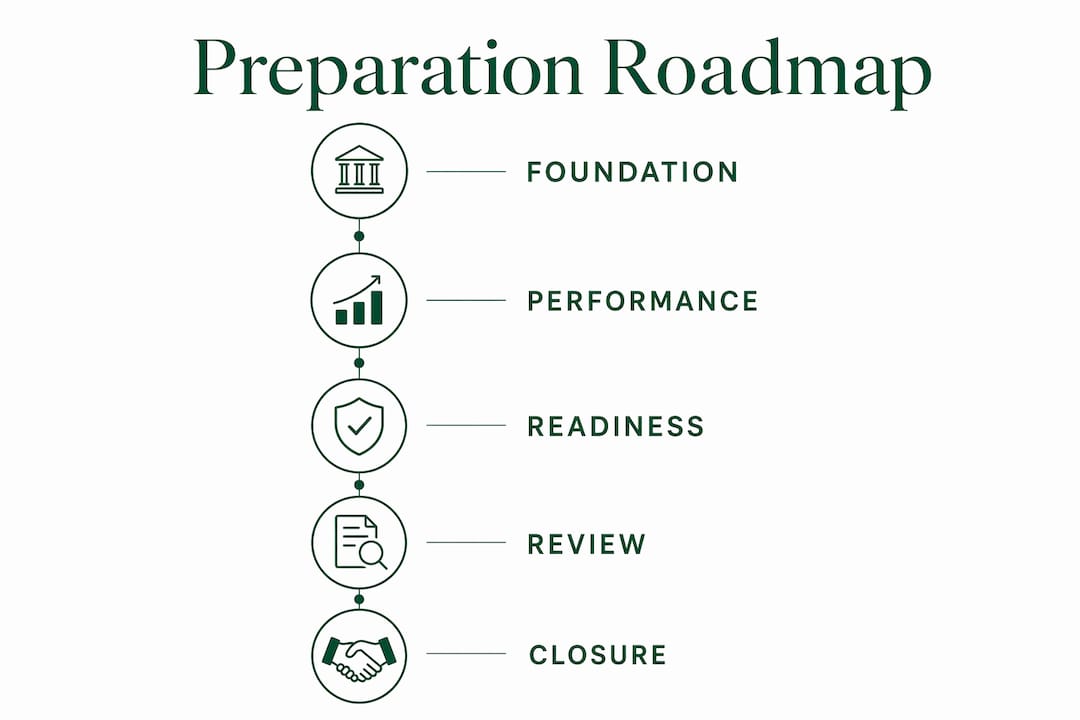
Phase 1: Foundation building (months 1–6)
The first six months focus entirely on getting your financial house in order. Commission a baseline valuation, clean up your books, and establish monthly reporting that a buyer’s accountant can follow without questions. Identify your top three value gaps from the valuation report and assign owners to each one. Remove personal expenses from business accounts. Separate any assets that are not part of the operating business.
Phase 2: Performance improvements (months 7–12)
Months seven through twelve are for operational improvements that show up in the financials. Diversify your customer base if concentration is a risk. Hire or promote a manager who can run daily operations without your involvement. Document your core processes in writing. These changes take time to produce measurable results, which is exactly why they belong in the middle phase, not the final sprint.

Phase 3: Sale readiness (months 13–18)
The final six months prepare you for buyer scrutiny. Commission a CPA-led quality of earnings review. Set up a data room with organized financials, contracts, employee records, and compliance documents. Commission a second valuation to reflect the improvements made. Buyers pay higher multiples for businesses showing two years of improving financial performance than for those with only a few cleanup quarters. That second valuation becomes your asking price anchor.
- Commission a baseline valuation in month one.
- Clean and standardize three years of financial records.
- Identify and close your top value gaps.
- Diversify revenue and reduce customer concentration.
- Build a management team that operates without you.
- Document all core systems and processes.
- Complete a quality of earnings review with a CPA.
- Build and populate a data room.
- Commission a final valuation before going to market.
Pro Tip: Set a milestone review at the end of each six-month phase. If a key metric has not improved, address it before moving to the next phase. Skipping ahead compounds problems.
How to build buyer confidence and reduce risks that erode value
Buyers assess four fundamental questions focused on business continuity, financial reliability, risk reduction, and management depth. Sellers who answer those questions before the first meeting remove the leverage buyers use to push prices down.
Founder dependency is the most common risk that erodes value. When a business cannot operate for two weeks without the owner, buyers see a liability, not an asset. The fix is not complicated. Promote a capable manager, document your decision-making processes, and step back from daily operations before you go to market. Buyers need to see that the business runs on systems, not on you.
Reducing owner dependency is one of the most impactful actions to protect your valuation. Businesses where the owner is operationally central command lower multiples and attract fewer qualified buyers.
Unverified financial add-backs are another pressure point. If you claim $150,000 in personal expenses run through the business, buyers will discount that number unless a CPA has verified it. A quality of earnings review converts those claims into documented, defensible adjustments.
“Most successful sellers address potential concerns months before buyers use them as negotiation leverage.” — Davis Wright Tremaine
Key risk mitigation steps every seller should complete:
- Reduce customer concentration below 20% for any single client.
- Formalize key employee contracts and retention agreements.
- Document all supplier relationships and renewal terms.
- Prepare a written growth plan with realistic projections.
- Verify all financial add-backs through a CPA review.
- Confirm all licenses, permits, and regulatory filings are current.
Pro Tip: Walk through your business as if you were the buyer. Write down every question you would ask. Then answer each one in writing before your first buyer meeting.
Who should be on your deal team and how to plan for tax efficiency
A qualified deal team including M&A advisors, CPAs, lawyers, and tax professionals is critical to a smooth, tax-efficient sale. Each role serves a distinct function, and gaps in the team create gaps in the outcome.
Your M&A advisor manages the sale process, positions the business to buyers, and negotiates deal terms. Your CPA handles financial due diligence, quality of earnings, and tax structuring. Your legal counsel reviews contracts, representations, and warranties. Your tax advisor models the after-tax proceeds under different deal structures, including asset sales versus stock sales, installment arrangements, and earnout provisions.
Tax planning is not a closing-week task. The structure of your deal determines how much of the sale price you actually keep. An asset sale and a stock sale of the same business at the same price can produce meaningfully different net proceeds depending on your tax situation. That conversation belongs in month one, not month seventeen.
Deal team roles and tax considerations:
- M&A advisor: Positions the business, manages buyer outreach, and leads negotiations.
- CPA/accountant: Prepares quality of earnings, verifies financials, and supports due diligence.
- Legal counsel: Drafts and reviews purchase agreements, reps, and warranties.
- Tax advisor: Models net proceeds under different structures and timing scenarios.
- Financial planner: Advises on post-sale wealth management and reinvestment.
Coordinating these advisors early prevents conflicting advice and delays. Compassbusinessacquisitions connects sellers with experienced advisors and manages that coordination as part of the business sale process.
What mistakes should you avoid during strategic sale preparation?
Starting too late is the most expensive mistake owners make. The overall sale process typically spans 9–12 months after preparation, and preparation itself takes 12–18 months. Owners who decide to sell and expect to close within six months consistently leave money on the table.
Overcomplicating your financial systems is a close second. Buyers want clarity, not sophistication. A business with simple, consistent monthly reporting is easier to value and faster to close than one with elaborate accounting structures that require explanation.
Ignoring documented systems is another common error. If your processes live in your head, buyers cannot verify them. Written procedures, training materials, and process maps convert institutional knowledge into transferable assets.
Do’s and don’ts for business exit strategy execution:
- Do start preparation at least 18 months before your target sale date.
- Do commission a professional valuation before making any improvements.
- Do build a management team that can operate without you.
- Don’t wait until you receive an offer to organize your financials.
- Don’t mix personal and business expenses in the months before sale.
- Don’t make major capital investments in the final six months without buyer input.
Pro Tip: Track three to five key performance indicators monthly throughout your preparation period. Consistent improvement in measurable metrics is the most credible story you can tell a buyer.
Key Takeaways
Owners who prepare a business for sale through a phased, documented process consistently achieve higher multiples, faster closings, and fewer deal complications than those who sell reactively.
| Point | Details |
|---|---|
| Start 18 months early | Preparation takes 12–18 months; starting late reduces both price and options. |
| Commission two valuations | A baseline valuation and a final valuation bracket your improvement and anchor your asking price. |
| Reduce founder dependency | Buyers discount owner-dependent businesses; a capable management team protects your multiple. |
| Verify all financial claims | A CPA-led quality of earnings review converts add-backs into defensible, buyer-ready numbers. |
| Assemble your deal team early | M&A advisors, CPAs, legal counsel, and tax advisors must coordinate from the start, not the finish. |
What I’ve learned from watching owners prepare to sell
The owners who get the best outcomes are rarely the ones with the most profitable businesses. They are the ones who treated the sale as a project with a plan, milestones, and a team. I have seen businesses with strong revenue sell at disappointing multiples because the owner waited too long or skipped the financial cleanup. I have also seen average businesses sell at premium prices because the seller spent 18 months making the story undeniable.
The hardest part is not the financial work. It is the mindset shift. Owners who have built a business over 20 years often resist stepping back from daily operations. But that step back is exactly what buyers need to see. A business that depends entirely on its founder is not a business. It is a job with overhead.
The other thing I would tell any owner is this: do not aim for perfection. Aim for consistency and progress. Buyers understand that businesses have warts. What they cannot accept is uncertainty. A business with documented systems, verified financials, and a clear growth plan gives buyers confidence. Confidence drives price. Start early, phase your work, and get professional guidance before you need it. You can read more about your exit strategy options before committing to a path.
— Sierra
How Compassbusinessacquisitions supports your sale preparation
Compassbusinessacquisitions works with business owners from the earliest stages of sale preparation through final closing. The team provides professional valuations, targeted buyer marketing, and full transaction management so sellers can focus on running their business while the process moves forward.

Whether you are 18 months from your target date or ready to go to market now, Compassbusinessacquisitions tailors its approach to your timeline and goals. The firm’s network of qualified buyers and in-depth market knowledge consistently produces offers that reflect the true value of a well-prepared business. Connect with the team through the seller services page to request a confidential consultation and take the first step toward a sale that meets your financial and personal goals.
FAQ
How long does it take to prepare a business for sale?
Preparation typically takes 12–18 months, followed by a sale process of 9–12 months. Owners who start earlier have more time to close value gaps and build a stronger financial track record.
What is a quality of earnings review?
A quality of earnings review is a CPA-led analysis that verifies a business’s reported earnings, confirms add-backs, and identifies any financial risks. Buyers use it to validate the numbers before finalizing an offer.
How does a business sale prospectus help attract buyers?
A business sale prospectus presents your business’s financials, operations, and growth potential in a structured format that serious buyers expect. It reduces back-and-forth questions and accelerates the due diligence process.
What is the biggest factor that reduces a business’s sale price?
Founder dependency is the most cited factor that reduces sale price or kills deals entirely. Buyers discount businesses where the owner is central to daily operations because continuity risk is high.
When should I start assembling my deal team?
Assemble your deal team at the start of your preparation period, not when you receive an offer. Early coordination between your M&A advisor, CPA, legal counsel, and tax advisor prevents conflicting advice and costly delays.